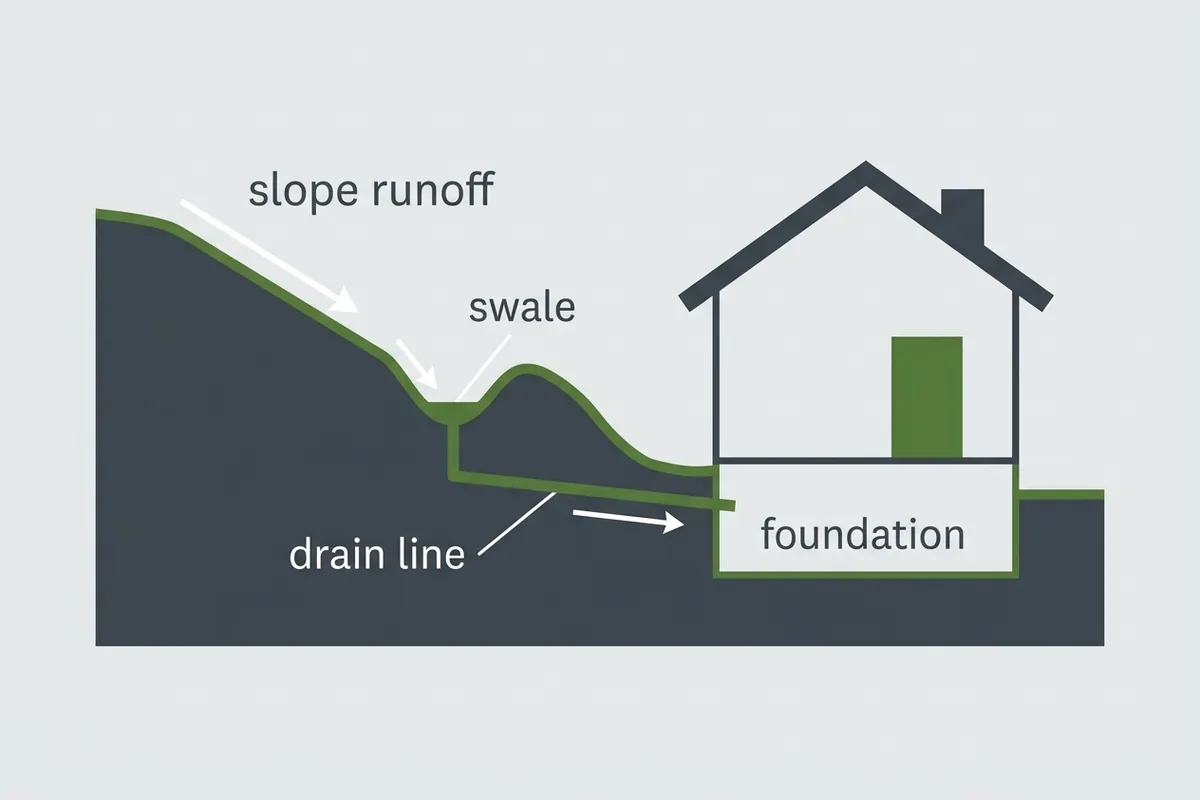
Exterior foundation waterproofing in Chattanooga seals the wall; interior drainage manages water below the slab. On slopes the first spend is neither: intercepting the hill’s runoff — drainage correction at $1,500–$8,000 — then sizing the wall system for what remains.
The slope-water sequence, and how each system serves what’s left after interception.
The uphill wall’s double duty
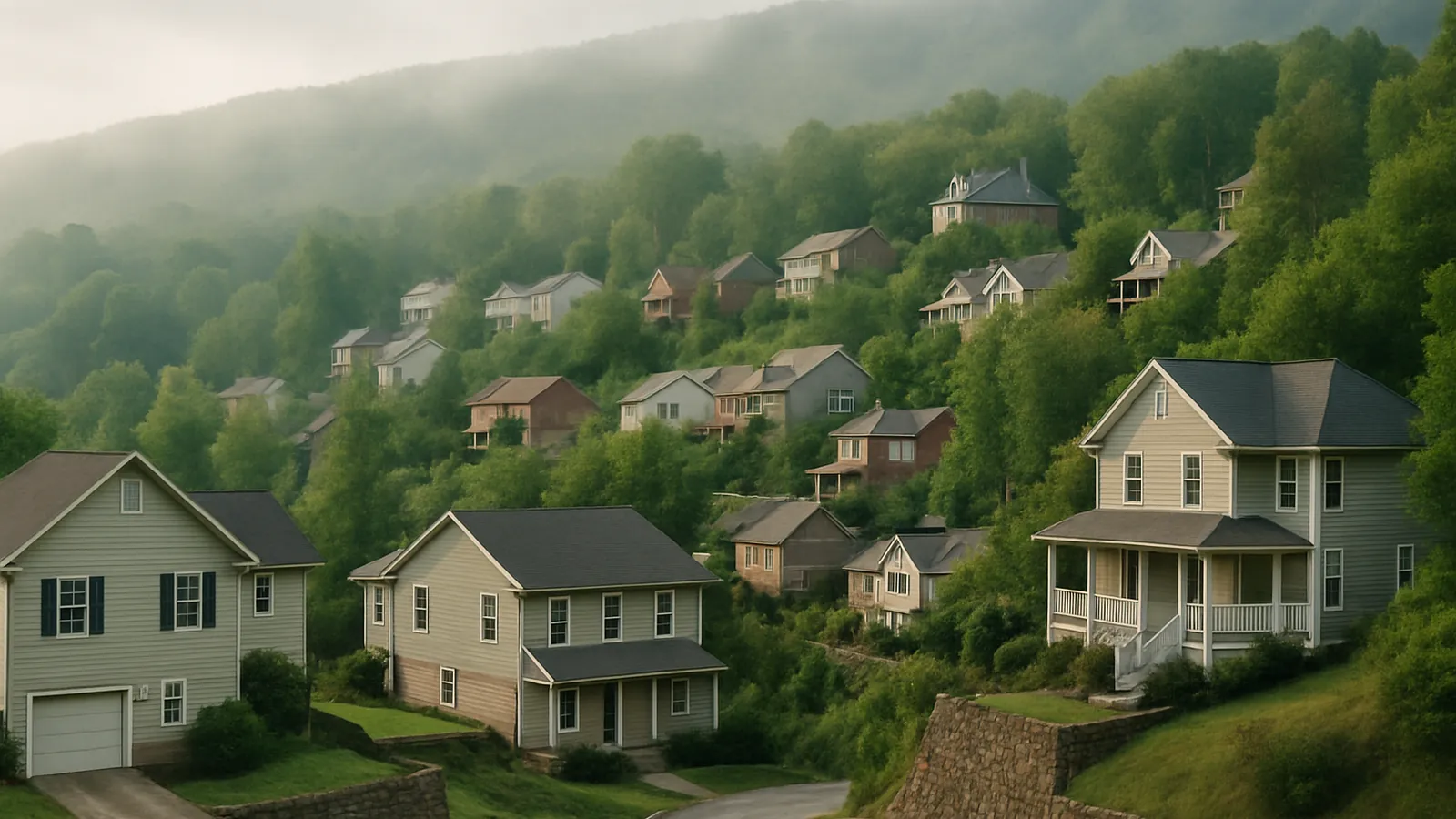
Hillside construction cuts into the slope, and the uphill wall holds back both the cut and everything the weather sends down it — 54 inches a year, mostly in winter and spring, moving as concentrated runoff rather than gentle percolation. That wall sees more water than any flat-lot foundation in Tennessee, and it often takes structural pressure at the same time, which is why this metro’s bowing-wall work and its waterproofing questions keep arriving at the same address. No wall-side system — membrane or drain — should be sized before the hill’s supply is cut.
The two systems, honestly compared — after interception
| Exterior membrane | Interior drainage | |
|---|---|---|
| Promise | Water stopped at the wall face | Water exits below the slab; floor stays dry |
| Chattanooga cost | Per wall — slope excavation dominates | Priced with the drainage scope |
| Disruption | Excavating a cut on an occupied slope lot | Interior slab-edge work, days |
| Best slope case | Uphill cut already open for wall repair | Occupied house, finished space, residual seepage |
| Discharge rule | Footing drain routed around and downslope | Sump discharge downslope — never uphill of the house |
Where waterproofing meets foundation repair
The slope bundles its problems. Uphill walls that leak also lean — restraint work that opens the cut makes exterior membrane nearly free at the margin, and that combination is the honest case for exterior waterproofing here. Water that reached the footing long enough has usually moved something — the settlement-and-creep diagnosis comes before any system on houses already showing displacement. And under the house, the same slope water fills crawl spaces, which get their own sequence. One slope, one scope, ordered right — every price in the cost guide.
What the system needs from you afterward
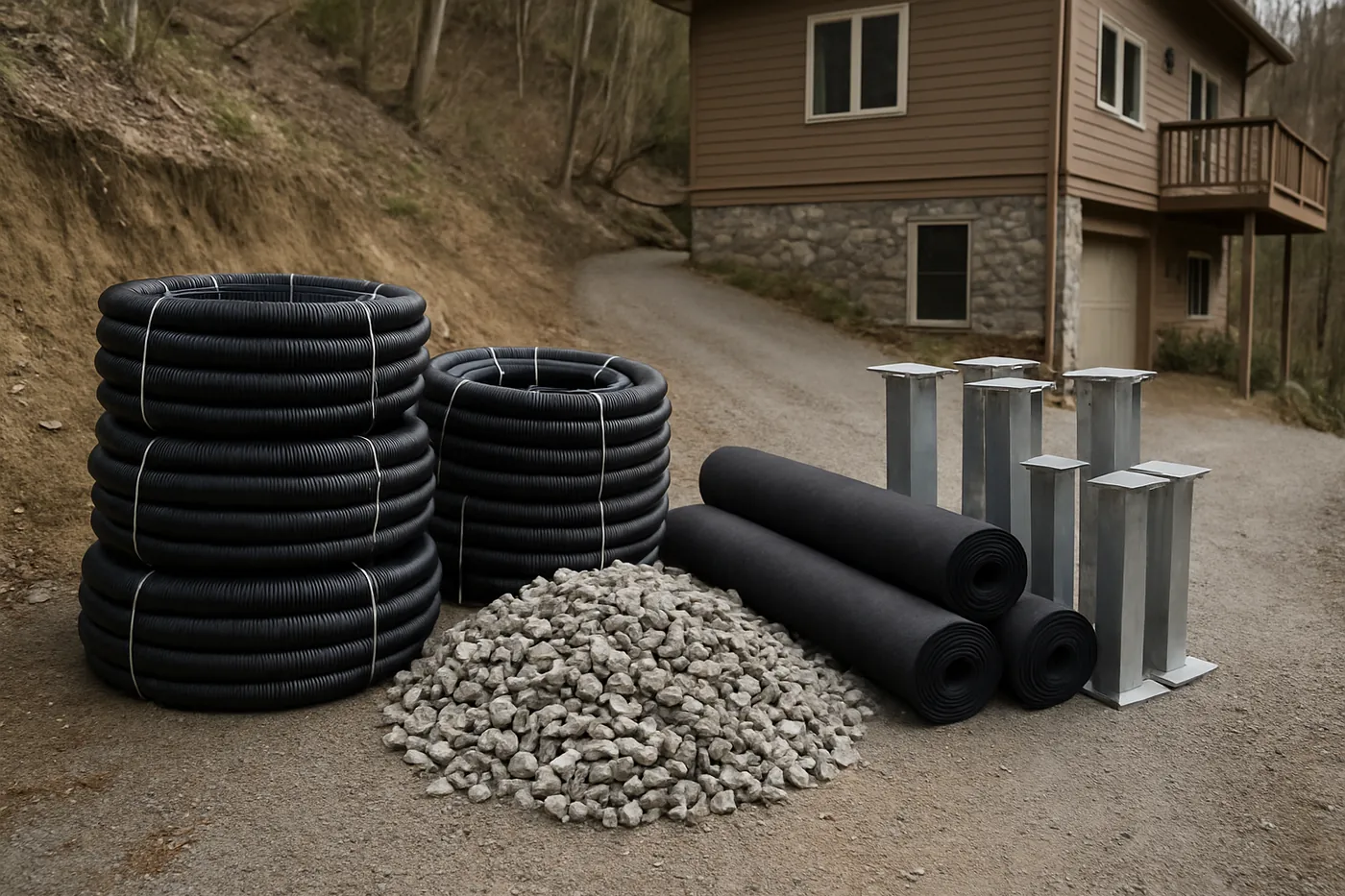
An interception system fails from neglect long before it fails from age, and on a slope the neglect compounds fast. Once a year — and again after any storm that makes the news — walk the uphill side: confirm the interception trench and its outlet are clear, that the last runoff didn’t re-cut a path around the trench’s end, and that leaf litter hasn’t turned the swale into a dam. Clean the gutters, because on a hillside lot a clogged downspout delivers concentrated water exactly where you paid to stop it. If a sump is in the scope, pour a five-gallon bucket in and watch the float lift and the pump run. And keep discharge dispersed and downhill of the house — never into a valley sink or low spot.
Waterproofing questions, straight answers
Which approach fits a hillside basement in Chattanooga?
The slope decides more than the system does. An uphill basement wall takes concentrated runoff no membrane or drain can ignore — so the honest first spend is interception above the house, then the wall-side choice. For occupied homes that's usually interior drainage; exterior membrane earns its dig when wall repair opens the cut anyway.
Why does interception come before either system?
Because the hill outworks anything you install at the wall. Fifty-four inches of rain concentrated on a slope arrives as sheets of moving water; swales, curtain drains, and routed discharge cut the load before it exists. Systems sized after interception are smaller, cheaper, and last longer — sized before it, they're pumping the hill all winter.
When is exterior membrane clearly right here?
When the uphill cut is already open. Bowing-wall repairs on slope houses often excavate the uphill side — and with the trench open, membrane and a footing drain go in for the cost of materials against a wall that genuinely needs them. That combination is common enough here that it's practically the local standard for uphill walls.
What does interior drainage do on a slope lot?
Exactly what it does anywhere — perimeter channel, sealed sump, water exits below the slab — with one slope note: discharge routing matters doubly, because pumping water out uphill of your own foundation is recycling it. Discharge goes around and downslope, and on valley-floor lots, dispersed rather than concentrated, out of respect for the karst below.
What should I fix before buying any system?
The slope's plumbing: gutters and downspouts first — roof water is slope water you're allowed to control — then grading and surface routing. On hillside lots a share of wet-basement calls resolve above the house entirely, and every remaining system shrinks. Our evaluations start uphill, because that's where the water story starts.
What part of this can I do myself?
The cheapest part, usually, and often the highest-return. Extending downspouts, clearing gutters, and correcting the first ten feet of grade are homeowner work, and on plenty of houses they solve the problem outright — we would rather tell you that than sell you a system. What is not DIY is anything needing excavation, a footing-level drain, or a sump tied into plumbing and electrical.
Does a retaining wall count as waterproofing?
Not by itself, though on these slopes the two jobs meet constantly. A retaining wall holds soil; it does not drain it, and a wall built without drainage behind it becomes a dam that concentrates water rather than moving it. Where a wall is part of the picture, its drainage and your foundation's interception have to be designed as one system, or each will undo the other.
Get a free Chattanooga foundation evaluation
Tell us what the house is doing — stair-step cracks, a wall pushed in on the uphill side, water crossing the lot, sloping floors — and we’ll schedule an evaluation with photos, measurements, and a walk of the slope. We reply the same business day.