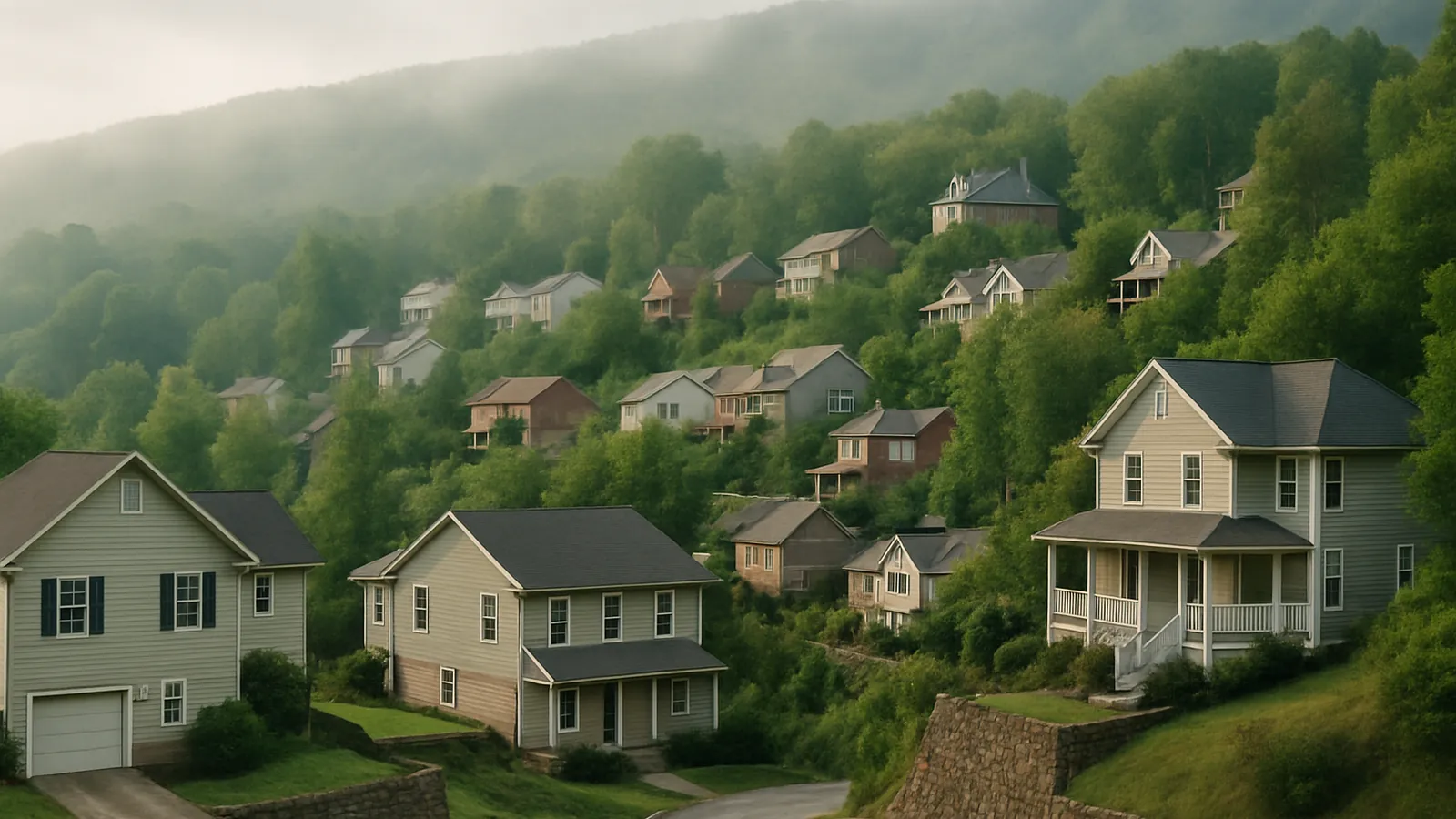
Foundation settlement repair in Chattanooga runs $4,000–$15,000 for most homes, with piers at $1,200–$3,000 each placed where an elevation survey shows the footing dropped. On Ridge-and-Valley slopes, 54 inches of yearly rain drives both vertical settlement and downslope creep — and the two take different repairs.
Slope mechanics, the valley karst check, and what repair involves on this terrain.
Settlement with a slope attached
Flat-country settlement is vertical: clay loses moisture or strength, the footing drops. Add Chattanooga’s terrain and a second axis appears. Hillside homes are cut into slopes, and the residual clays over limestone and shale hold those cuts only as long as they stay reasonably dry. The metro’s 54 inches of rain — among Tennessee’s wettest, concentrated in winter and spring — keeps testing that condition: saturated clay both softens under footings (settlement) and loses its grip on the rock beneath (creep). The elevation survey and crack pattern separate them, and the distinction matters because piers fix the first directly while the second demands the water be answered too.
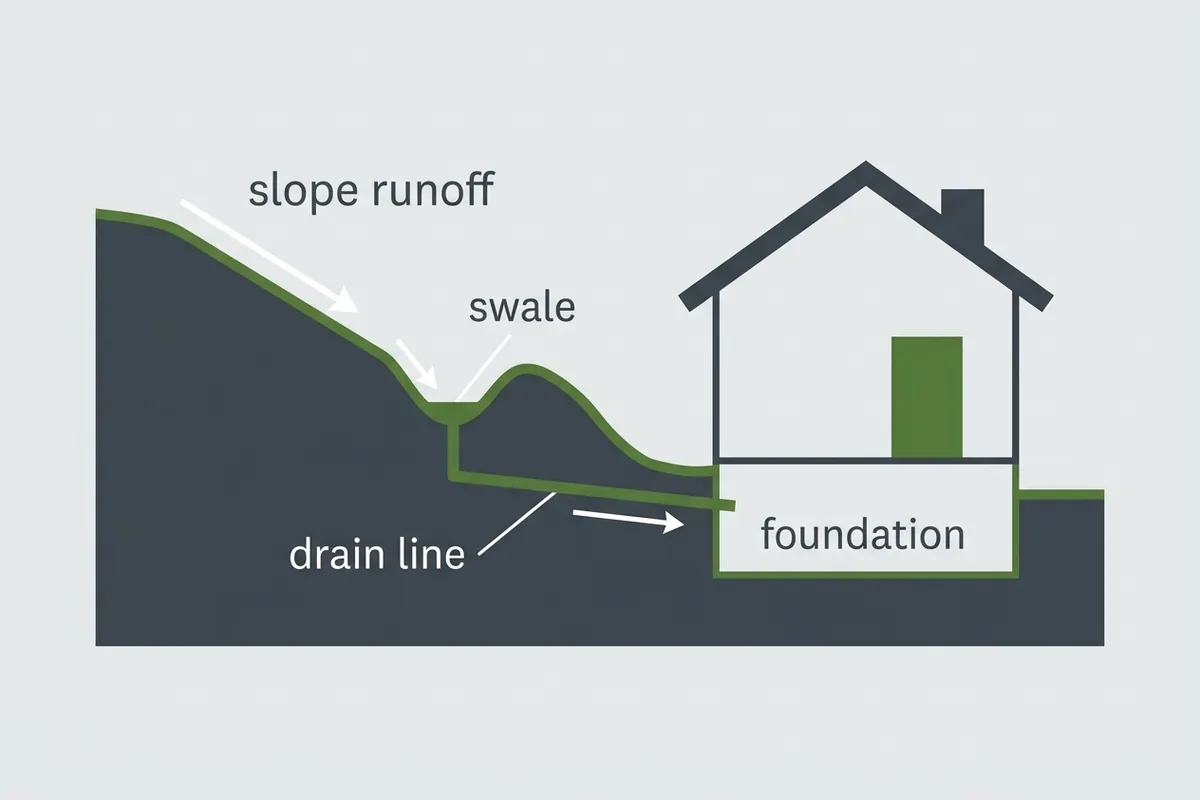
The pattern on slopes is positional rather than solar: the uphill cut takes the slope’s concentrated runoff and moves first, the downhill side follows the fill it was built on, and the valley floor plays by its own rules below.
Where your house sits decides what it does
| Position | What the ground does | Typical repair path |
|---|---|---|
| Uphill cut | Concentrated runoff saturates the cut; walls bow, footings soften | Piers plus wall restraint and drainage |
| Downhill side | Built on placed fill that consolidates or creeps | Piers through fill to native bearing |
| Slope with retaining walls | Failing walls transfer the hill’s load to the house | Wall repair sequenced with foundation work |
| Valley floor | Clay cycles — plus documented karst below | Survey, records check, engineering review if flagged |
The valley karst check
The limestone under Chattanooga’s valleys carries documented solution cavities and springs — groundwater moving on rock’s schedule, not the weather’s. Most valley-floor settlement is still ordinary clay work, but movement that ignores the seasons or pairs with a yard depression gets the harder look: records, then independent engineering eyes, before any repair is designed. Steel over a raveling cavity is money buried, and this metro’s geology has earned the checking step.
How the repair works
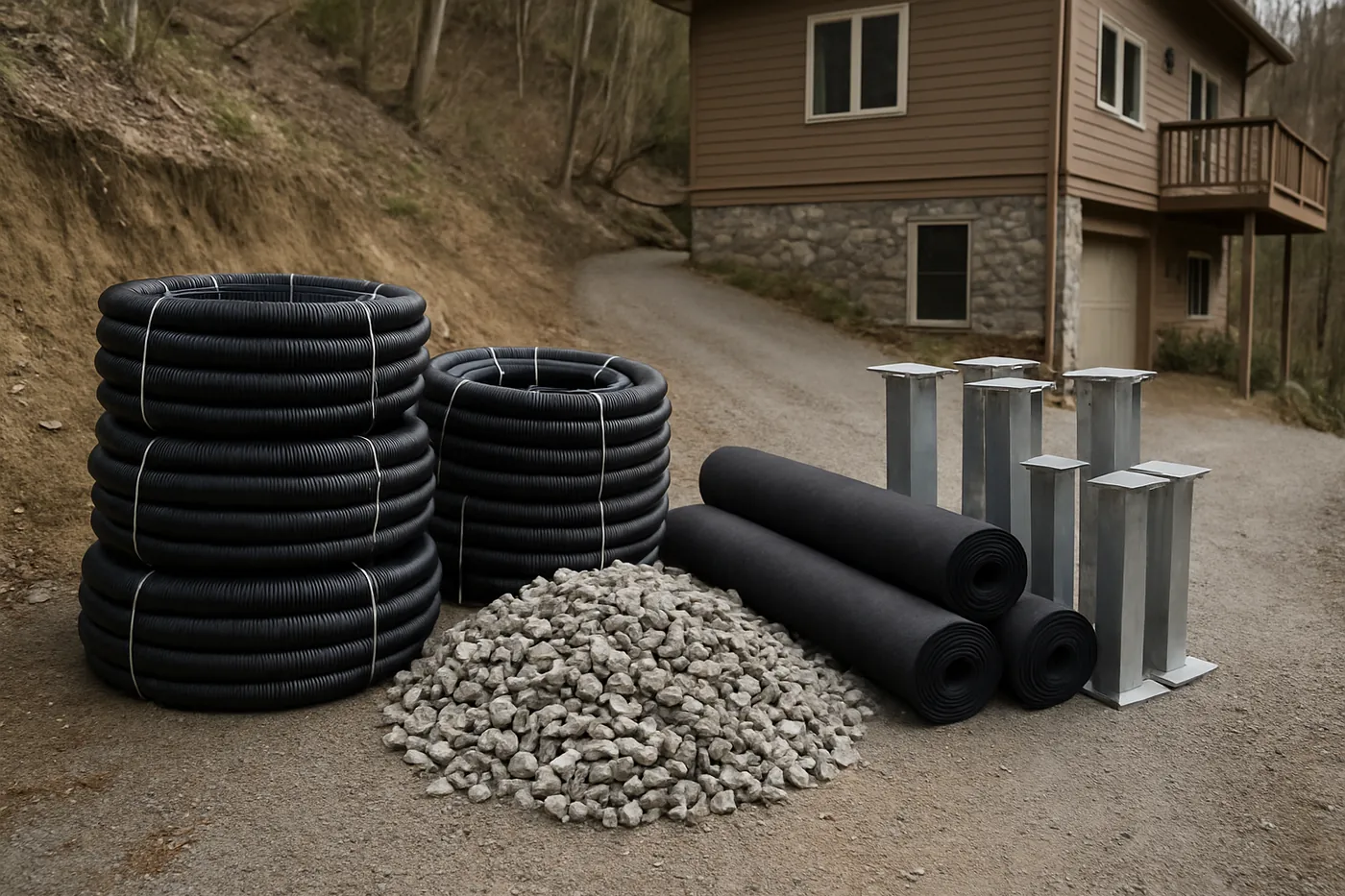
Steel piers carry the footing through saturated clay and fill to bearing that holds — each pier logged; mechanics live on the piering page and the steel choice on the helical-versus-push page. The slope rule is absolute: the water gets fixed with the structure. Drainage correction intercepts the hill’s runoff before it reaches the cut, retaining walls get sequenced where they share the load path, and crack repair closes out the masonry once movement is resolved. The cost guide itemizes every range.
The first year after the piers
Piers stop the movement; they don’t erase its history. Give the house one full seasonal cycle before you chase cosmetics — and on this terrain that cycle is emphatic, with 54 inches of rain loading the slope through winter and spring, then a drier late summer. Hairline cracks can breathe a little through it, so patch drywall and re-point brick after a full wet-and-dry year and you patch once instead of twice. Monitor for free in the meantime: a dated photo and a pencil line drawn across each crack answers “is it still moving?” in ten seconds.
One slope-specific addition — walk the uphill side after the first heavy storm. Piers hold the house; only drainage holds the hill, and the storm will tell you whether the water is still arriving where it was.
Settlement questions, straight answers
How is settlement different on a Chattanooga hillside?
Direction gains a meaning it doesn't have on flat ground. A hillside house can settle vertically like any house — or creep downslope as saturated clay loses grip on the rock beneath. The elevation survey plus crack patterns tell them apart: settlement drops a footing run; downslope movement opens characteristic diagonal patterns and racks toward the valley side.
Why does the uphill side of my house move most?
Because it does two jobs. The uphill footing carries the house and absorbs the hill: every storm sends the slope's runoff against that cut, saturating the clay behind it. Fifty-four inches of rain concentrated in winter and spring means months where that soil never dries. Uphill walls bow, uphill footings soften — the slope writes the pattern.
Is my problem the foundation or the retaining wall above it?
Often both, sharing one cause. A tired retaining wall uphill lets the slope's soil and water press closer to the house; the foundation then takes load the wall was built to hold. Fixing the foundation while the wall keeps failing is repairing downstream of the leak — which is why our scopes read the whole slope, wall and footing together.
Does the karst under the valleys change anything?
It adds the check. The limestone valleys around Chattanooga carry documented solution cavities and springs that move groundwater unpredictably — so valley-floor movement that ignores the seasons, or pairs with a depression, gets records checked and engineering eyes before repair design. Ridge and slope calls are usually clay and water; the valley floor earns the extra step.
What does settlement repair cost in Chattanooga?
Most full repairs run $4,000 to $15,000, with piers at $1,200 to $3,000 each placed where the survey shows loss. Slope jobs often pair steel with drainage or retaining-wall work, priced in the same written scope — because on a hillside, fixing the house without fixing the water is renting the repair, not owning it.
Get a free Chattanooga foundation evaluation
Tell us what the house is doing — stair-step cracks, a wall pushed in on the uphill side, water crossing the lot, sloping floors — and we’ll schedule an evaluation with photos, measurements, and a walk of the slope. We reply the same business day.