Foundation repair in Chattanooga costs $4,000–$15,000 for most full structural repairs, $1,200–$3,000 per pier, $1,500–$8,000 for slope drainage, $2,500–$10,000 for wall restraint, and $400–$1,500 for crack repair. Simple grading and downspout corrections often start under $500.
Below: what each range buys, what pushes a quote up or down on hillside lots, and the questions that separate an honest bid from an expensive one.
Chattanooga foundation repair prices by fix
| Repair | Typical range | What it covers |
|---|---|---|
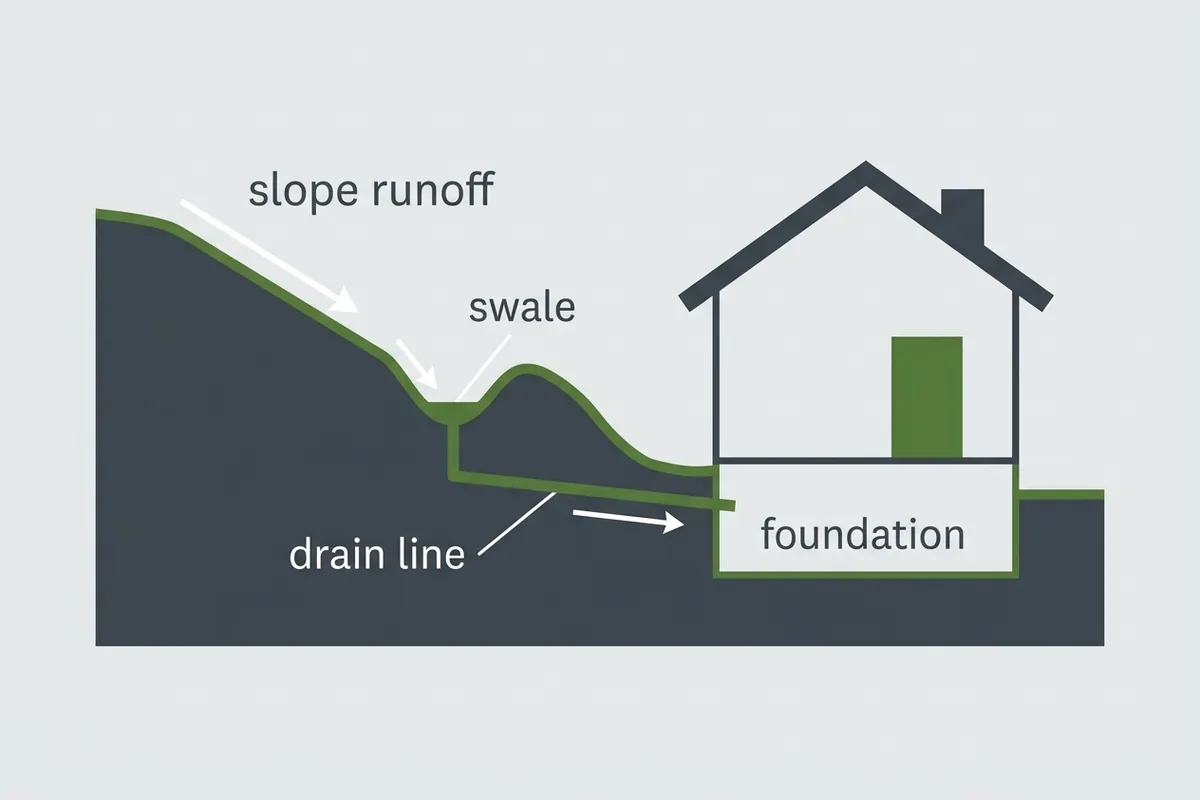
| Slope drainage correction | Under $500–$8,000 | Downspout extensions and regrading at the low end; uphill swales and bedded interception lines with a walked discharge at the high end |
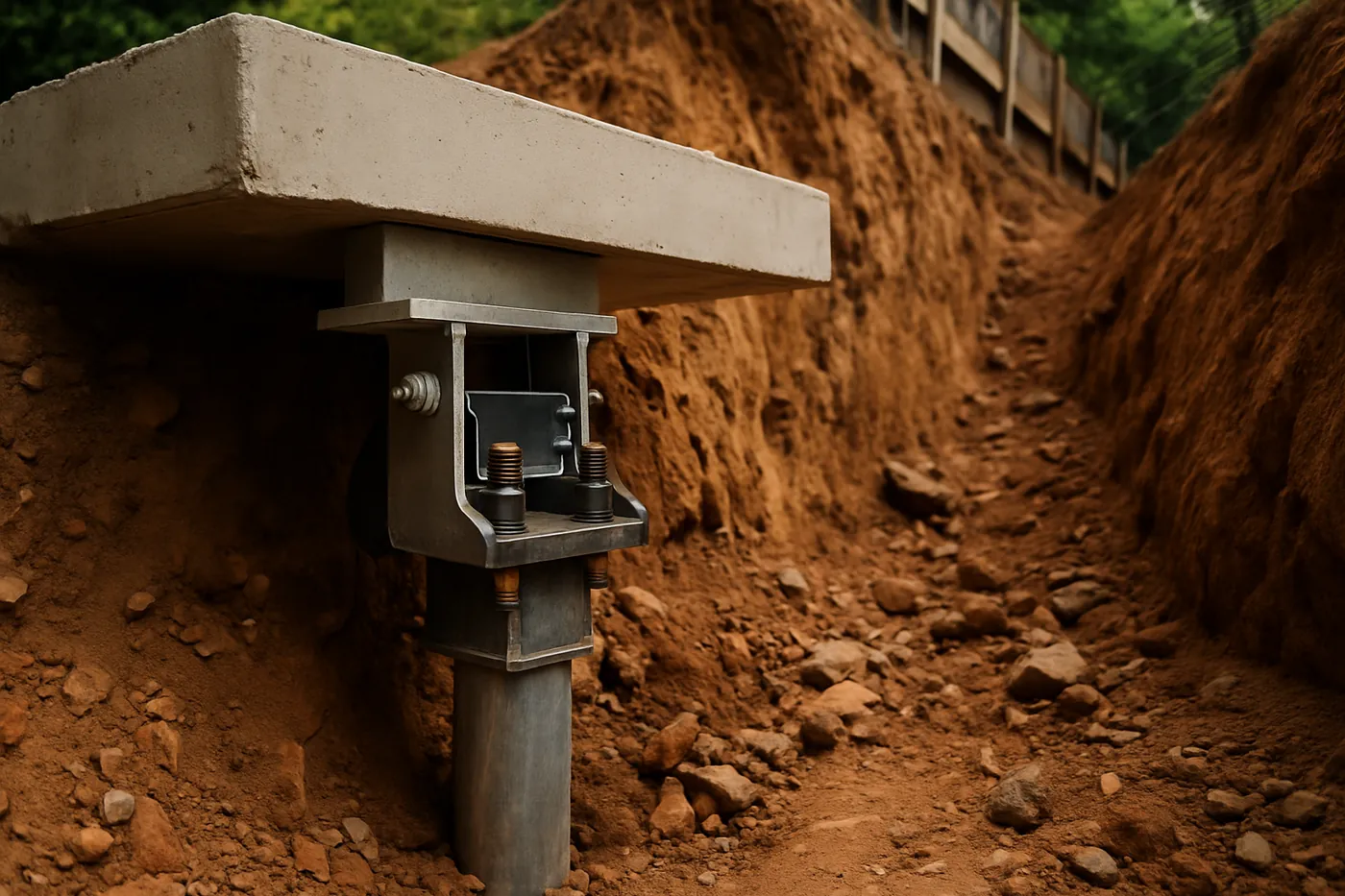
| Piering / underpinning | $4,000–$15,000+ | Three to eight steel piers driven to refusal on limestone or stable bearing, bracketed to the footing, refusal pressure logged individually |
| Bowing wall repair | $2,500–$10,000 | Carbon fiber under about an inch of deflection; steel braces or wall anchors beyond it |
| Retaining wall repair | $1,500–$12,000 | Drainage retrofit, anchors and tiebacks, partial or full rebuild with gravel backfill and a discharge path |
| Crack repair | $400–$1,500 | Polyurethane or epoxy injection, carbon staples, masonry repointing |
Figures reviewed July 2026. Sources you can check: The soil, geology, and climate claims on this page are checkable against primary sources: see USDA Web Soil Survey for Hamilton County soil series data, Tennessee Division of Geology for Ridge-and-Valley geology and karst mapping, and NOAA U.S. Climate Normals for Chattanooga precipitation. Repair-cost ranges are typical figures, explained on the cost guide.
The four factors that move a Chattanooga quote
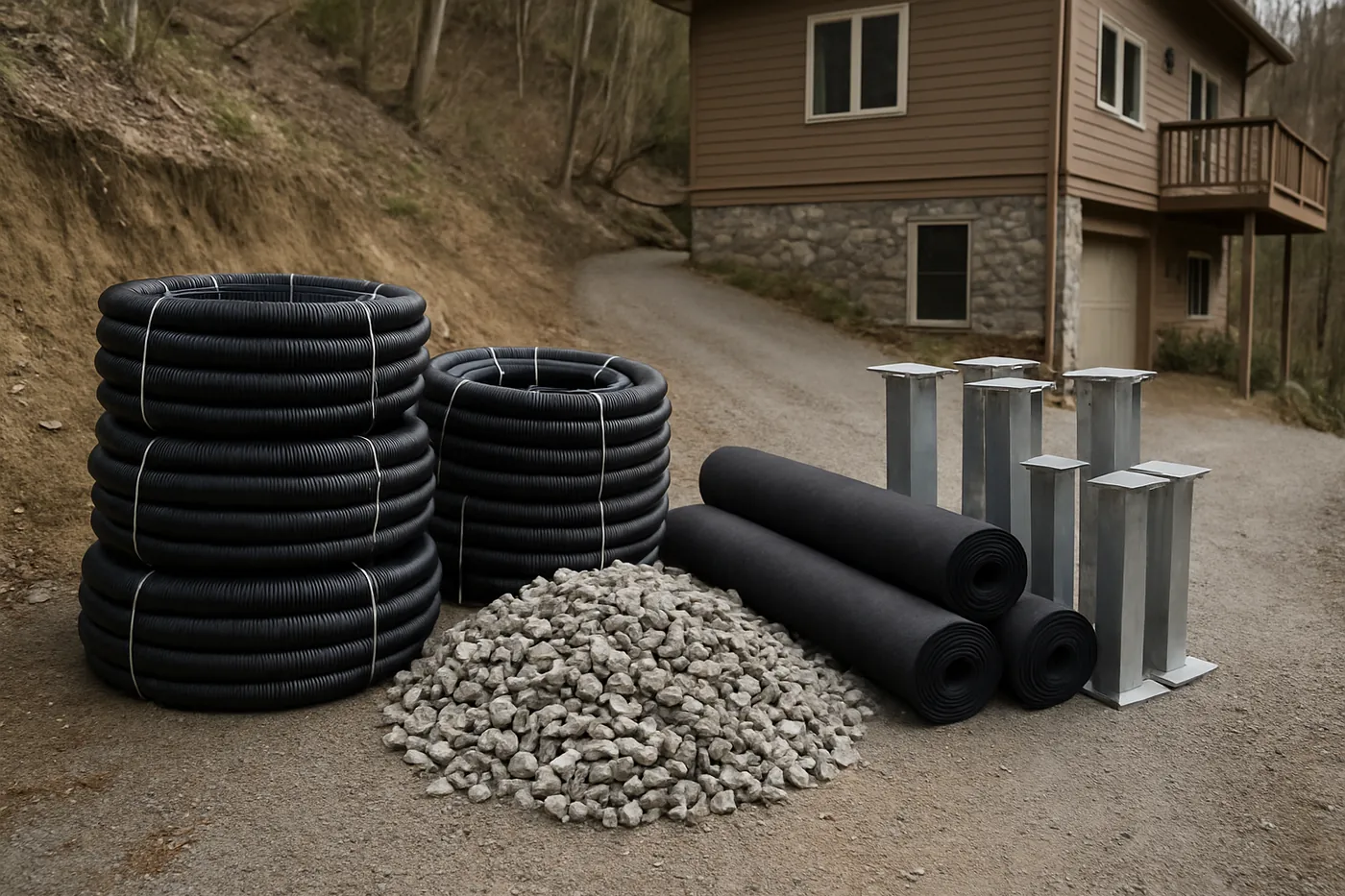
1. How much water the lot delivers. This is the first question on a hillside, and it's the one most estimates skip. A house receiving concentrated runoff from acres above it has a different problem, and a different price, than the same house on level ground. The walk uphill is what establishes it.
2. Depth to refusal. The largest source of legitimate variation between honest bids. Residual soil over limestone and shale means depth to rock varies sharply across a single lot, so two piers twenty feet apart can differ genuinely. Sections are priced individually, which makes an assumed depth an expensive guess.
3. How much of the footing moved. Price follows the affected run defined by a laser floor survey, not the square footage of the house. A large home that settled in one wing may need fewer piers than a smaller home that dropped along a full side.
4. Access on a slope. Steep lots, retaining walls in the way, tight hillside side yards, and limited equipment routes add real hours, and sometimes rule out a method entirely (wall anchors need yard room beyond the wall, which an uphill cut lot may not have). These are constraints, not mysteries, and they belong itemized in a scope.
Comparing bids like an inspector
- Ask whether anyone walked uphill of the house. On this terrain a bid that never left the foundation is diagnosing a symptom.
- Ask whether pier depths were measured or assumed, and ask to see the refusal pressure log at completion.
- Ask for the deflection measurement behind any wall restraint recommendation.
- Check whether drainage is included or excluded. Here, a structural bid that ignores water is an incomplete bid.
- Ask where the discharge terminates. On a slope, water routed to the wrong place becomes someone's problem, often yours again.
- Be skeptical of a karst pitch. Karst is real in these valleys and rarely the explanation for an ordinary crack. Anyone leading with sinkholes before ruling out drainage is selling, not diagnosing.
When the honest answer is "spend a few hundred dollars"
A meaningful share of Chattanooga evaluations end without a structural recommendation. A swale above the house, four extended downspouts, a regraded uphill side, and a driveway edge that stops funneling water at the garage wall resolve a real number of problems in this market, because on slope this steep and rain this heavy, routing is often the entire fix. Those visits get a written scope at that price and nothing more, because a company that never declines the larger sale isn't measuring anything.
Cost questions, straight answers
What's the average foundation repair cost in Chattanooga?
There isn't an average worth quoting. The spread is the honest answer. Crack injections start near $400; drainage correction runs $1,500 to $8,000, with simple fixes under $500; wall restraint $2,500 to $10,000; retaining wall work $1,500 to $12,000; and full piering $4,000 to $15,000. What decides your number is how much water the lot delivers and how much of the footing moved.
Why is the drainage line often bigger than the structural one?
Because on this terrain water is usually the cause rather than a contributing factor. Roughly 54 inches of rain a year landing on real slope means a hillside foundation can be receiving runoff from far more ground than its own. A scope that prices interception above the house as the main line is reading the lot correctly, not padding.
Why do two Chattanooga bids differ by thousands?
Usually because they scope different work, or because one measured pier depth and the other assumed it. Ridge-and-Valley ground means depth to rock varies sharply across a single lot, and pier sections are priced individually. Compare pier count and whether depths were measured, whether drainage is included, and whether the warranty transfers.
Is financing normal for this kind of work?
It's common, and staging is the alternative worth asking about. The sequencing here supports it naturally: exterior water corrections first (often a few hundred dollars, and they remove the cause), then drainage, then structural work. What shouldn't wait is a wall past two inches of deflection or a retaining wall rotating at its base.
Does foundation repair pay off at resale?
In this market it protects value more than it adds it. Buyers' inspectors here know hillside lots and look closely at the uphill side, crawl spaces, and retaining walls. An unaddressed water problem invites a renegotiation that routinely exceeds the repair cost, while a documented, warrantied, transferable repair closes the item.
Is there a charge for the evaluation?
Many local specialists don't charge for the first visit, but it depends on the company. Ask when the specialist calls, before they come out. Ask for photos, crack measurements, laser floor elevations, wall plumb readings, a walk of the water path above the house and a written, itemized scope, including in the outcome where the honest recommendation is a swale and four downspout extensions.
Get a Chattanooga foundation evaluation
Tell us what the house is doing (stair-step cracks, a wall pushed in on the uphill side, water crossing the lot, sloping floors) and we'll pass it to one independent local specialist for an evaluation. You get a call back from a local specialist who serves Chattanooga.