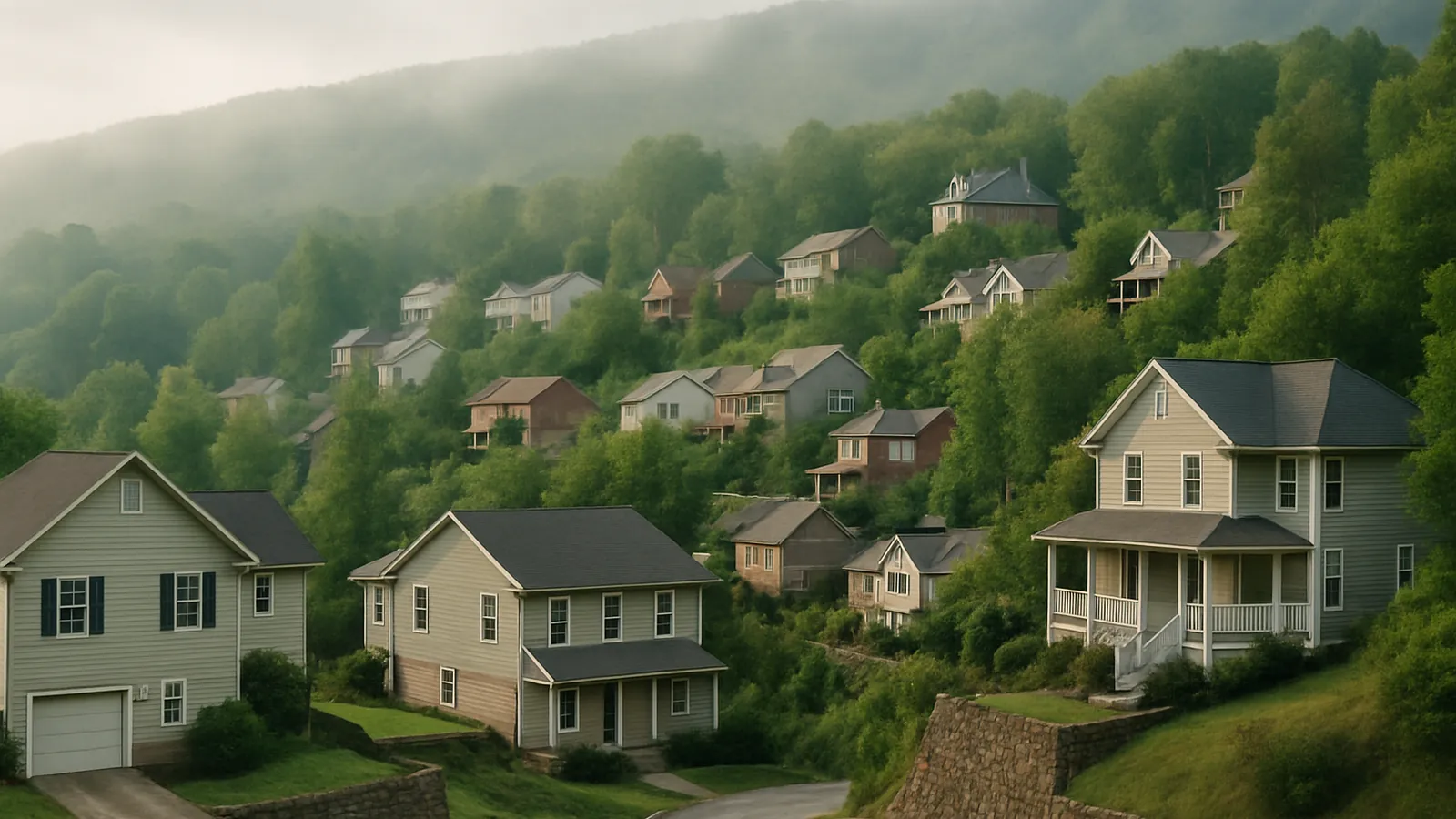
Crawl space waterproofing in Chattanooga runs $1,500–$8,000 for most drainage-led scopes: intercept the slope’s runoff, drain the space, then vapor barrier over dry ground. With 54 inches of rain concentrated in winter and spring, the hillside crawl space is this metro’s wettest room.
Why slope crawl spaces flood, how the water feeds foundation repair bills, and the order of operations.
The uphill wall problem, one story down
Chattanooga’s hillside homes ride crawl spaces over their cuts, and the crawl space inherits the slope’s arithmetic: every storm on the hill above converges on the uphill wall, and the wettest metro in Tennessee delivers that test for months at a stretch each winter and spring. Water finds the wall, then the ground inside, then the wood — sills, girders, and joists that carry the house, feeding rot in exactly the climate that finishes it. The damage is structural long before it’s visible from the hatch.
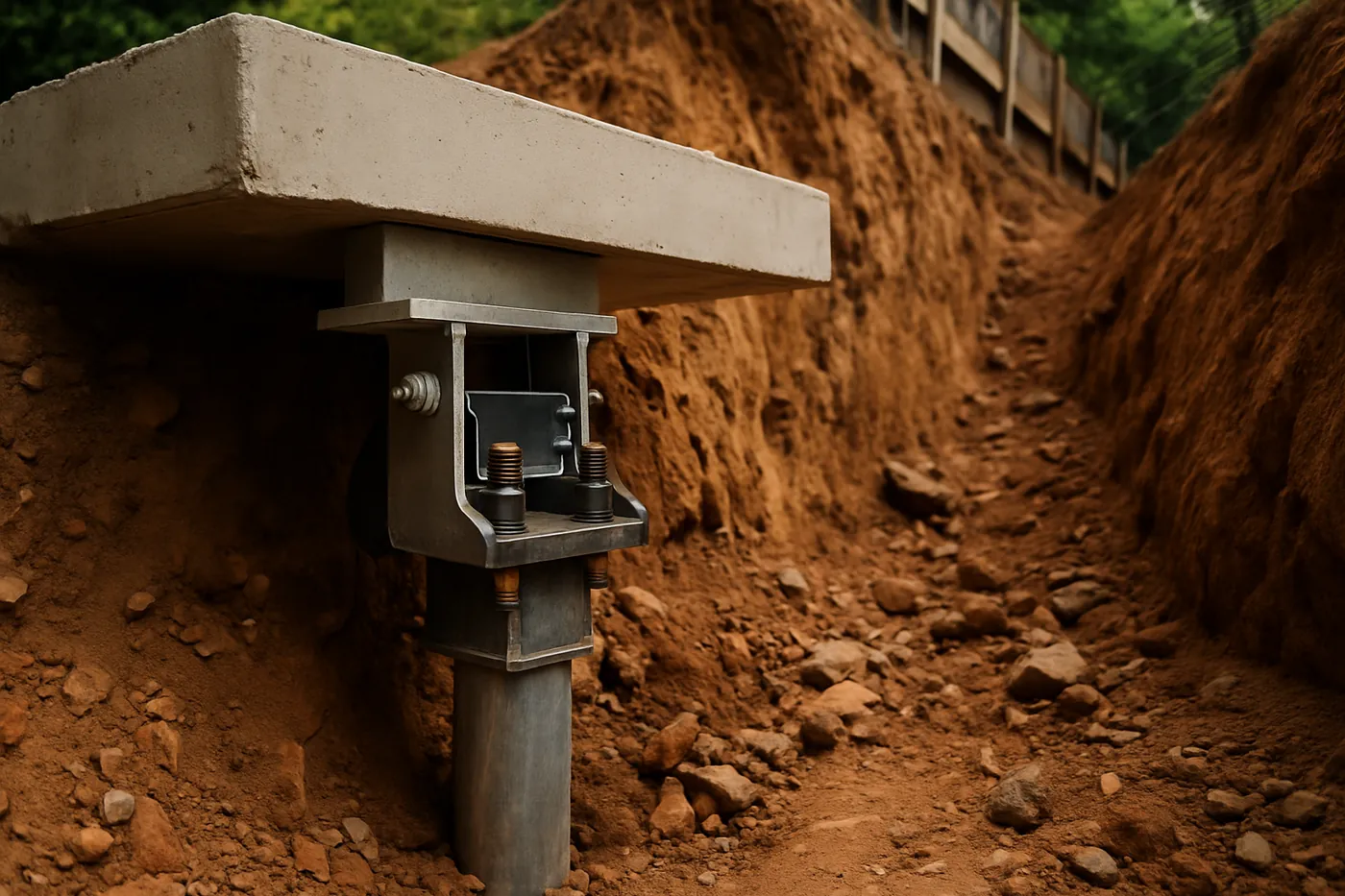
The order of operations — and why it can’t reverse
| Step | What it does | Why this order |
|---|---|---|
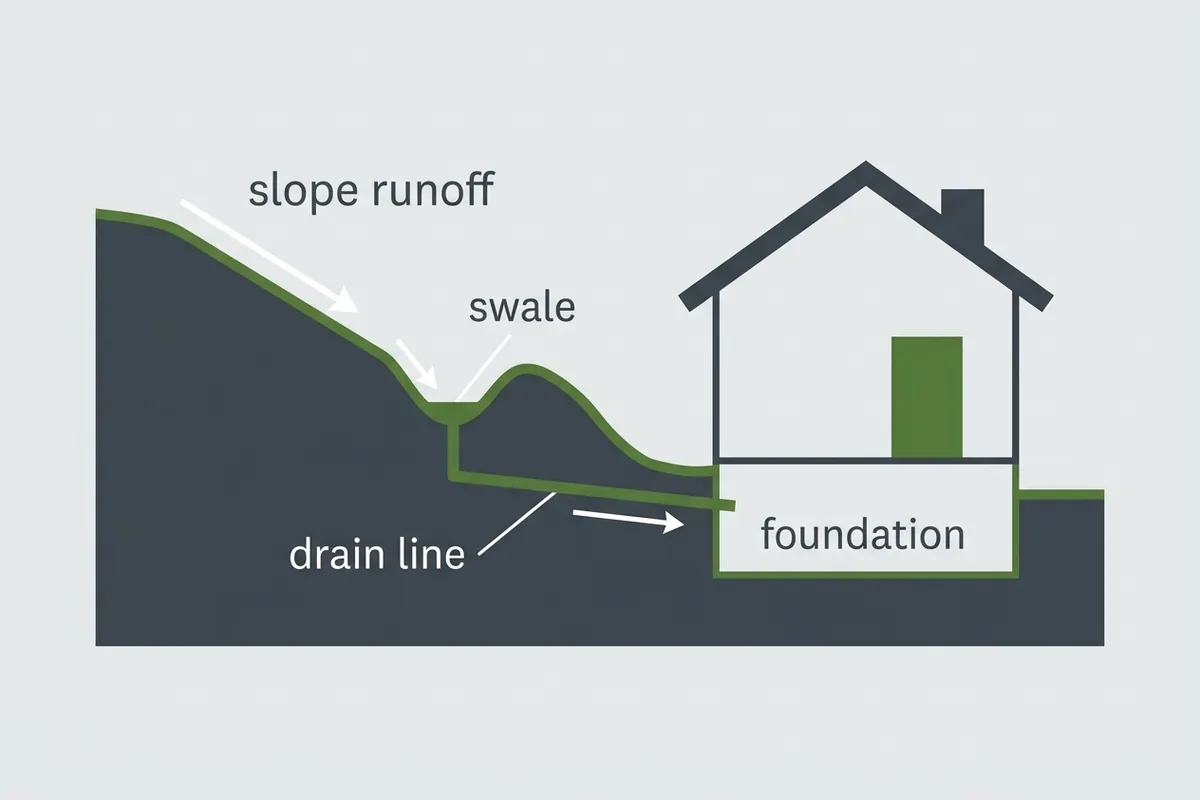
| 1. Intercept the hill | Swales, curtain/footing drains uphill, routed discharge | Stop the supply before touching the symptom |
| 2. Drain the space | Grading, perimeter drain, sump where needed | Give arriving water an exit below the wood |
| 3. Dry, then barrier | Vapor barrier over dry ground; ventilation kept clear | Barriers over wet ground hide the problem and feed it |
| 4. Repair the wood | Replace rot-claimed sills and girder sections | Shimming rot is painting rust — replace, don’t hide |
Bids that start at step three — plastic first, water questions never — are treating the part of the problem visible from the access hatch. The hill doesn’t care about the plastic.
Where crawl space water meets foundation repair
The same runoff that floods the crawl space softens footings and loads walls — which is why crawl space water work here shares scope lines with drainage correction above the house, wall restraint where the uphill wall is taking pressure as well as water, and the settlement diagnosis when the wet ground has already moved the structure. One slope, one water story, one sequenced scope — priced line by line in the cost guide.
What the free evaluation covers
A crawl-under with a flashlight and moisture meter: standing-water evidence, wood moisture readings at sills and girders, vent and barrier condition, photographs of everything where it sits — plus the walk uphill, because the crawl space’s problem usually starts fifty feet above it. You get the written findings whether or not you hire us; the crawl space is the rare place a homeowner can verify every claim in a bid.
Keeping a hillside crawl space dry after the work
A hillside crawl space stays dry because a system keeps working, so give it ten minutes twice a year. Check the uphill interception outlet for silt and leaf pack, look for a fresh channel where storm water tried to route around it, and confirm the liner is still sealed at the piers and walls where service work often peels it back. Test the sump with a bucket rather than trusting the indicator light. Then read the air: a hygrometer left in the crawl is the cheapest instrument you will ever own, and a reading that climbs above the 55% range in a summer month is early warning, not an emergency. Anyone crawling under for plumbing or HVAC should be told the liner gets re-sealed before they leave.
Crawl space questions, straight answers
Why do Chattanooga crawl spaces take so much water?
Terrain and totals. Hillside homes ride crawl spaces over their cuts, and the slope delivers every storm's runoff straight at the uphill crawl space wall — 54 inches a year, concentrated in the winter and spring months when nothing dries. A crawl space that takes the hill's water every wet season isn't unlucky; it's unmanaged.
What does water actually do under the house?
It attacks the wood. Standing water and chronic damp feed rot in sills, girders, and joists — the structure the house actually sits on — and this humid climate finishes what the water starts. Wet crawl spaces also breathe upward: musty air, swollen floors, and humidity loads the HVAC pays for. The structural damage is the expensive part.
What does crawl space waterproofing involve here?
Interception first: the hill's water gets caught before the wall — swales, surface routing, curtain or footing drains on the uphill side, discharge routed around and away. Then the space itself: grading so nothing ponds, a perimeter drain to a sump where water still arrives, and a vapor barrier over dry ground. Order matters; barriers over wet ground just hide it.
Is a vapor barrier alone enough?
Over dry ground, a barrier is excellent. Over wet ground, it's a tarp on a leak — moisture finds seams, wood keeps feeding, and the plastic hides the evidence. That's why the sequence runs interception, drainage, then barrier. A bid that leads with plastic and never mentions the uphill water is treating the symptom you can see from the hatch.
What does this cost in Chattanooga?
Drainage-led scopes run $1,500 to $8,000 depending on how much of the hill needs intercepting and whether a sump is required; the slope side of the work is what moves the number. Where rot has already claimed sills or girders, wood repair prices separately in the same written scope. The evaluation — crawl-under, with photos — is free.
Get a free Chattanooga foundation evaluation
Tell us what the house is doing — stair-step cracks, a wall pushed in on the uphill side, water crossing the lot, sloping floors — and we’ll schedule an evaluation with photos, measurements, and a walk of the slope. We reply the same business day.