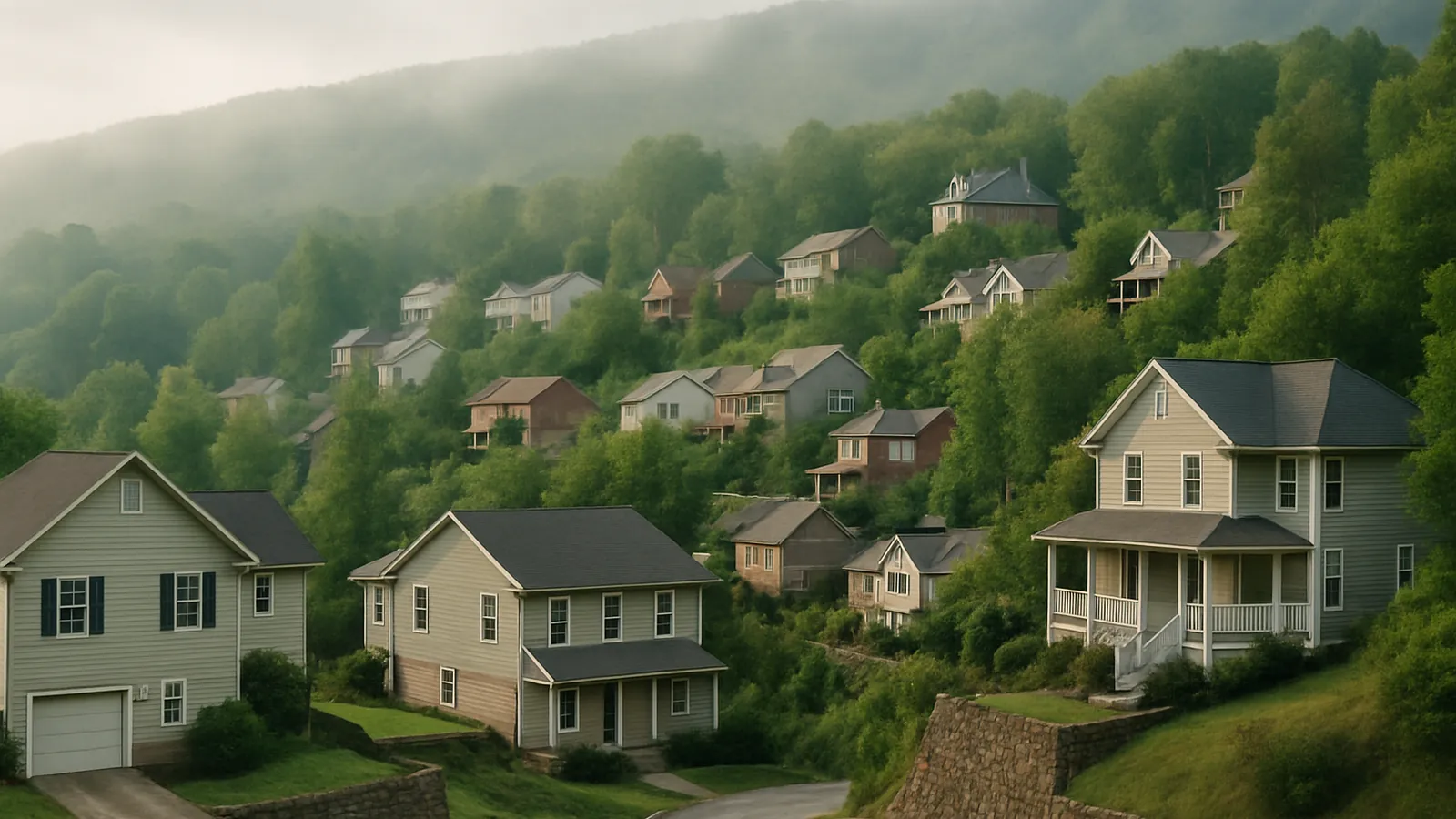
Helical and push piers for Chattanooga foundation repair both run $1,200–$3,000 per pier; the choice follows structure weight and slope position. Push piers drive to logged refusal under heavier masonry; helicals torque to measured capacity — the fit for light hillside frame, porches, and cut-and-fill lots.
How each proves capacity, and what Ridge-and-Valley terrain does to depth and choice.
Two proofs of the same promise
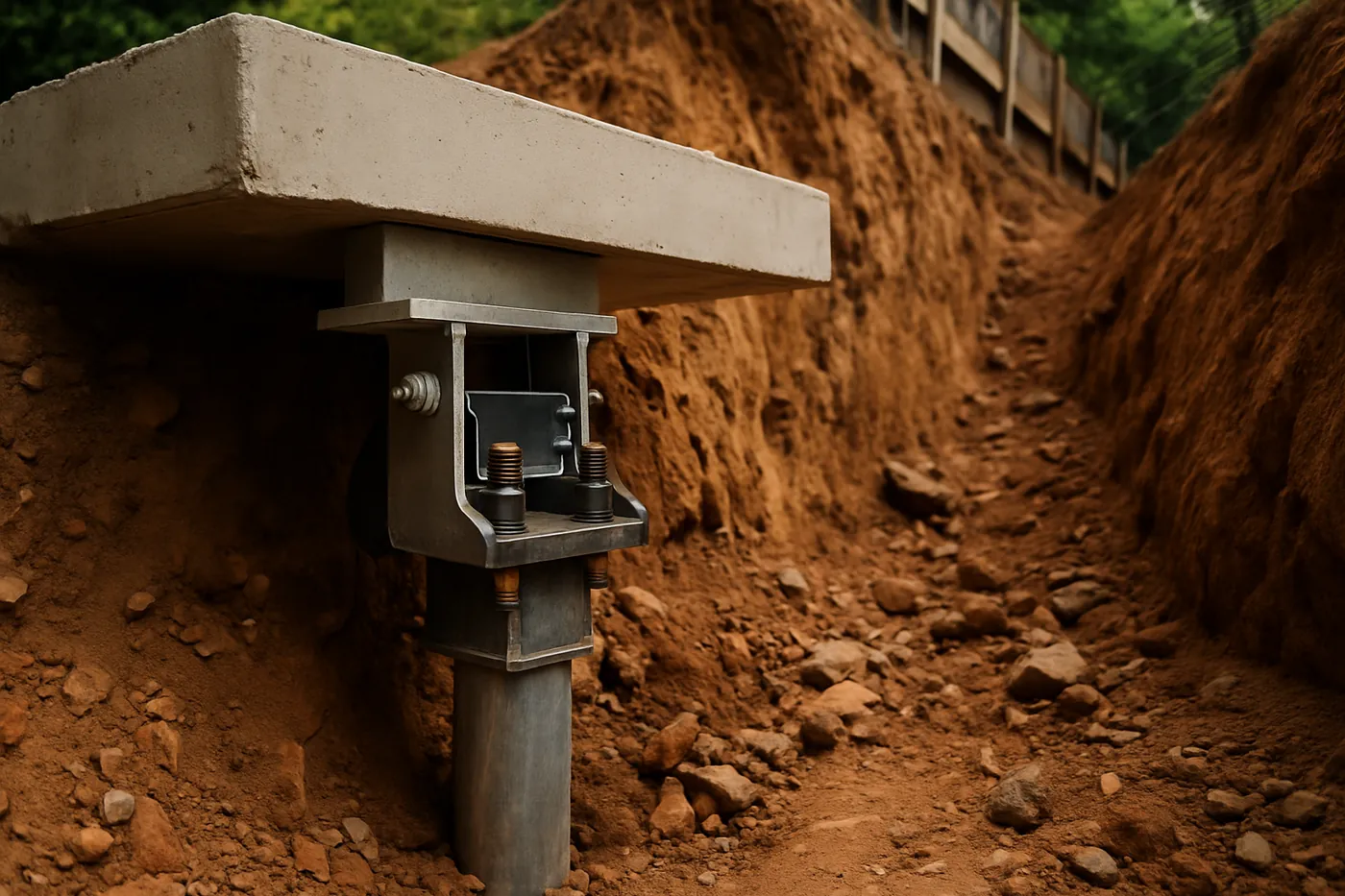
A pier here carries the footing through whatever the slope stacked above bearing — saturated cut clay uphill, placed fill downhill — to material that holds. A push pier is hydraulic steel driven beside the footing using the structure as reaction weight until it refuses; the logged refusal is its proof. A helical pier screws in on welded plates, installation torque correlating with capacity — proven by the gauge as it turns, no house weight required, and no driving reaction needed on a bench cut.
Side by side
| Push piers | Helical piers | |
|---|---|---|
| Advance | Driven against the structure’s weight | Rotated to specified torque |
| Proof | Refusal pressure, logged per pier | Installation torque, logged per pier |
| Needs house weight | Yes | No |
| Chattanooga fit | Heavier masonry on flatter lots | Hillside frame, cut-and-fill lots, porches, additions |
| Slope handling | Needs drive reaction — harder on benches | Torques in — kinder to slope work |
| Cost | $1,200–$3,000 per pier; depth varies by slope position | |
The cut-and-fill depth rule
Grading a hillside lot means cutting the uphill half and filling the downhill half — so one foundation can stand half on near-native ground and half on placed fill. Pier depths follow: short runs to bearing uphill, longer runs through fill downhill, all on the same house, all honest. The per-pier log is what keeps that honest — and fill is never accepted as bearing regardless of how it drives. Whether piers are the right repair at all is the settlement-versus-creep diagnosis, and anywhere the valley karst check raised a flag, engineering review comes first. Install mechanics live on the piering page.
Steel is half the slope answer
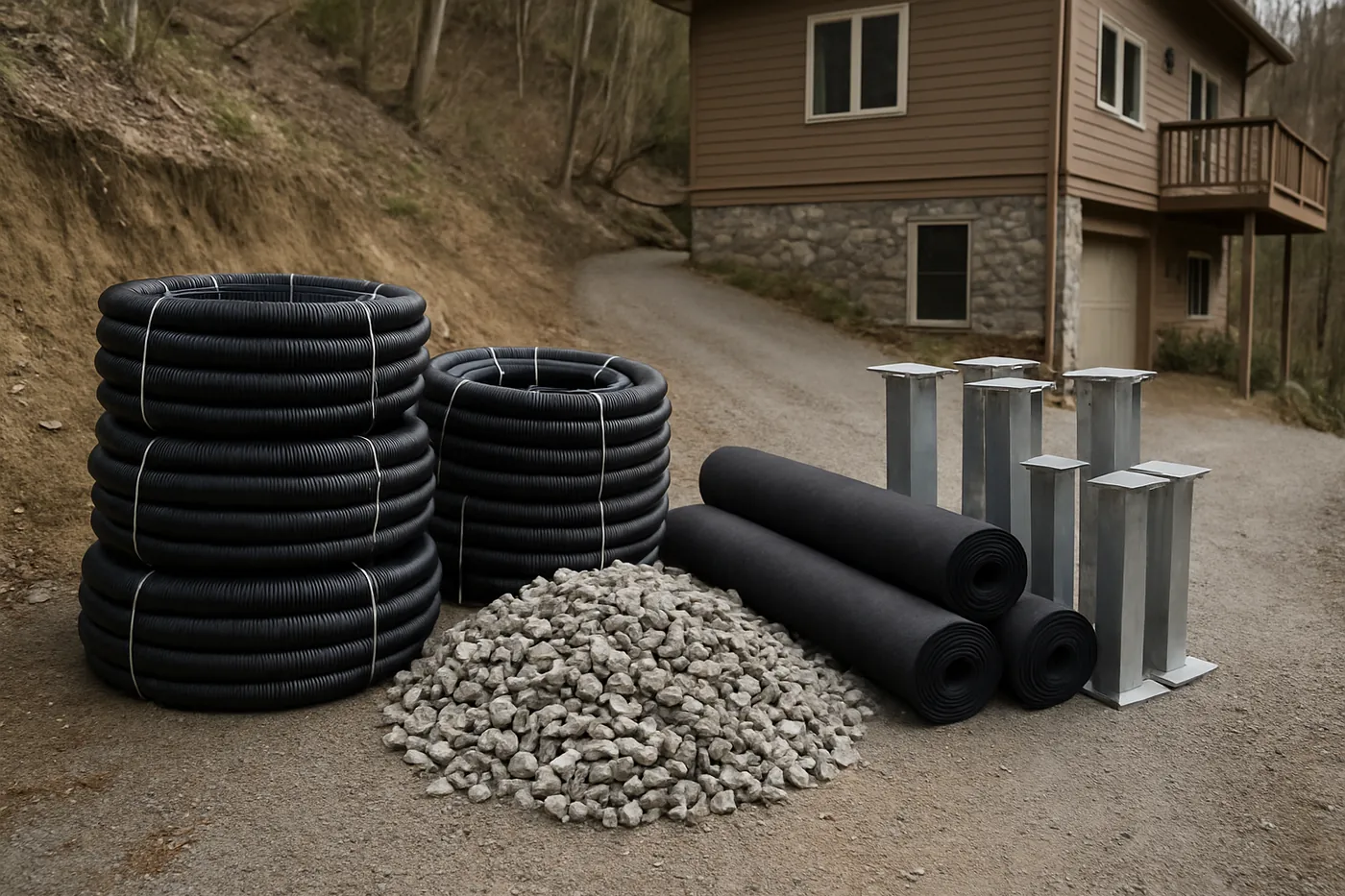
On a hillside, piers fix the footing while the hill keeps delivering water to the cut — so slope scopes pair steel with drainage correction above the house and, where a retaining wall shares the load path, wall work sequenced with the foundation’s. A pier bid that never mentions the water is pricing half the problem. The full arithmetic is in the cost guide.
What the pier warranty is actually worth
Read the warranty before you read the price. It covers the piers’ capacity — the supported section carrying its design load — not the whole house, and not the parts nobody piered. Four questions separate a real warranty from a brochure: is it transferable to the next owner, does a transfer cost a fee, does it cover the piered section or the structure, and does it survive the contractor closing its doors (third-party-backed warranties do; handshake ones don’t).
On hillside lots, ask one more: whether anything in the warranty is voided by drainage you were supposed to maintain. That clause is common, it is reasonable, and it is the one homeowners here discover too late. Keep the install log — a warranty with no depth or torque record has nothing standing behind it.
Pier questions, straight answers
Do the two pier types cost differently in Chattanooga?
No — both run $1,200 to $3,000 per pier, with depth to bearing and access driving the spread. Ridge-and-Valley ground varies that depth block by block: shallow rock on the ridges, deeper residual clay and fill on the slopes, valley floors with their own rules. The real choice is which proof your house can deliver — refusal needs weight, torque doesn't.
Which type fits hillside houses?
Usually helical, for two slope-specific reasons. Hillside homes skew light — frame construction on cut-and-fill lots — so push piers can run out of reaction weight before honest refusal. And helical installation torques in rather than driving, which matters when the machine is working on a bench cut above a drop. Heavy masonry on flat lots still argues for push.
How does a slope change pier placement?
Depth stops being symmetrical. On a cut-and-fill lot, the uphill footing may sit near native rock while the downhill footing stands on placed fill — so piers on one house can run wildly different depths, all honest. The per-pier log records each one; a bid that quotes one uniform depth across a hillside foundation hasn't read the lot.
What about pier work near the valley karst?
Verification before celebration. Early refusal in a limestone valley can be competent rock — or a ledge over a solution cavity. Drive behavior across piers tells the story, and anywhere the settlement diagnosis raised a karst flag, engineering review precedes steel entirely. Load transferred downward requires downward to be sound.
What documentation should any Chattanooga pier bid include?
Per-pier proof logging (torque or refusal), the depth assumption per position — uphill and downhill stated separately on slope lots — and the verification story for early refusal near the valleys. On this terrain those commitments are the difference between engineered repair and hopeful steel. Ours come in writing with a transferable warranty.
How long does the install take, and do we have to move out?
Most residential pier jobs run two to five days depending on pier count and access, and nearly everyone stays in the house. Expect equipment in the yard, excavation at the footings, and noise during working hours. Interior disruption is usually limited unless the scope includes a basement wall. The yard takes the visible hit, and restoration should be written into the scope.
Get a free Chattanooga foundation evaluation
Tell us what the house is doing — stair-step cracks, a wall pushed in on the uphill side, water crossing the lot, sloping floors — and we’ll schedule an evaluation with photos, measurements, and a walk of the slope. We reply the same business day.