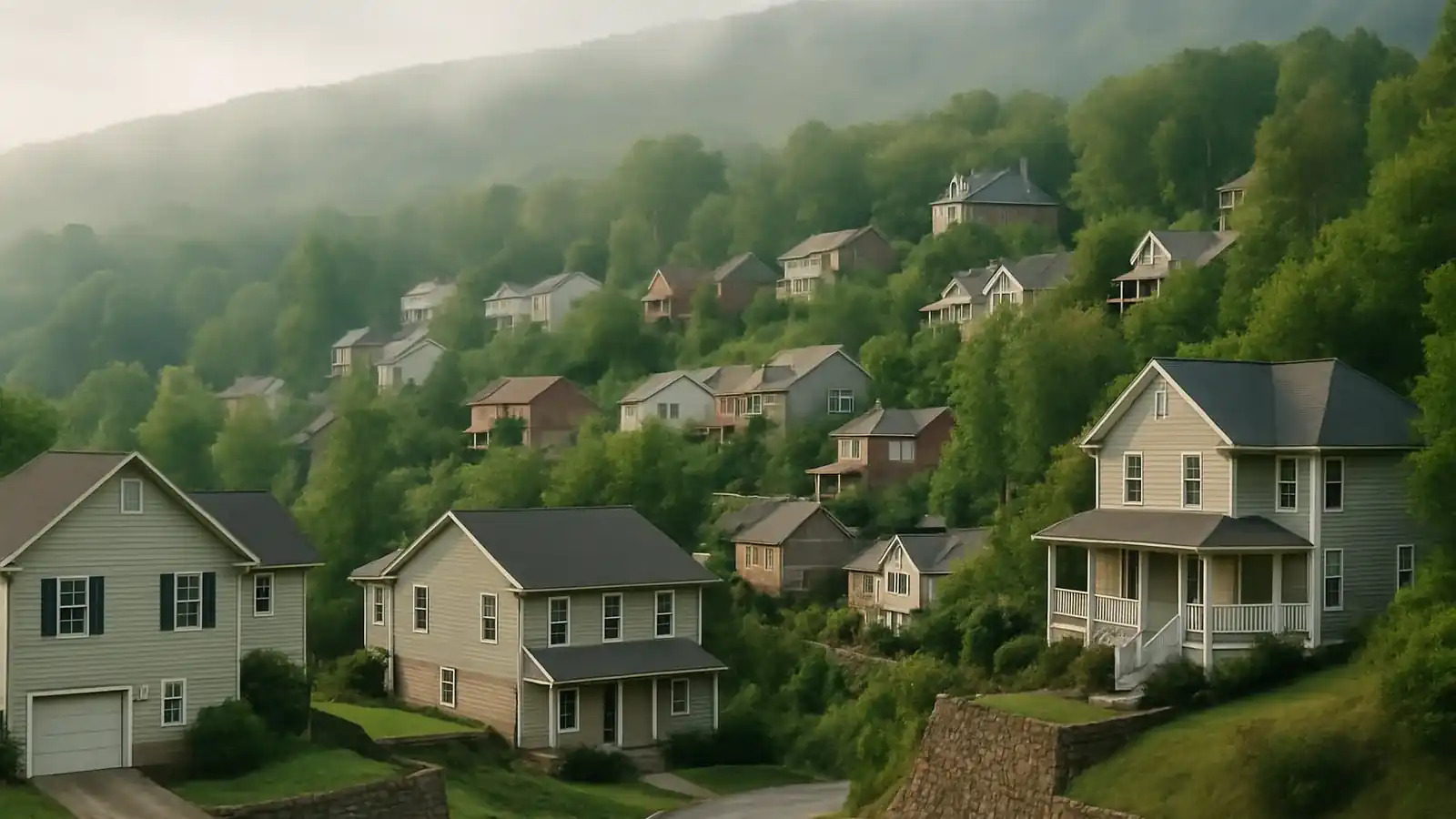
Most Ooltewah foundation work lands between $1,500 and $15,000, set by how much water the lot delivers, how much of the footing moved, and how deep piers must go to reach rock. Residual soil over limestone varies sharply across a single lot. Many local specialists don't charge for the evaluation; ask when they call.
A valley floor filling in fast
Ooltewah occupies one of the Ridge-and-Valley province's valley floors, and it has absorbed a great deal of the metro's recent growth. Land that was agricultural or wooded within living memory is now subdivisions, and that conversion involves earthwork on a scale that shapes what foundations do afterward.
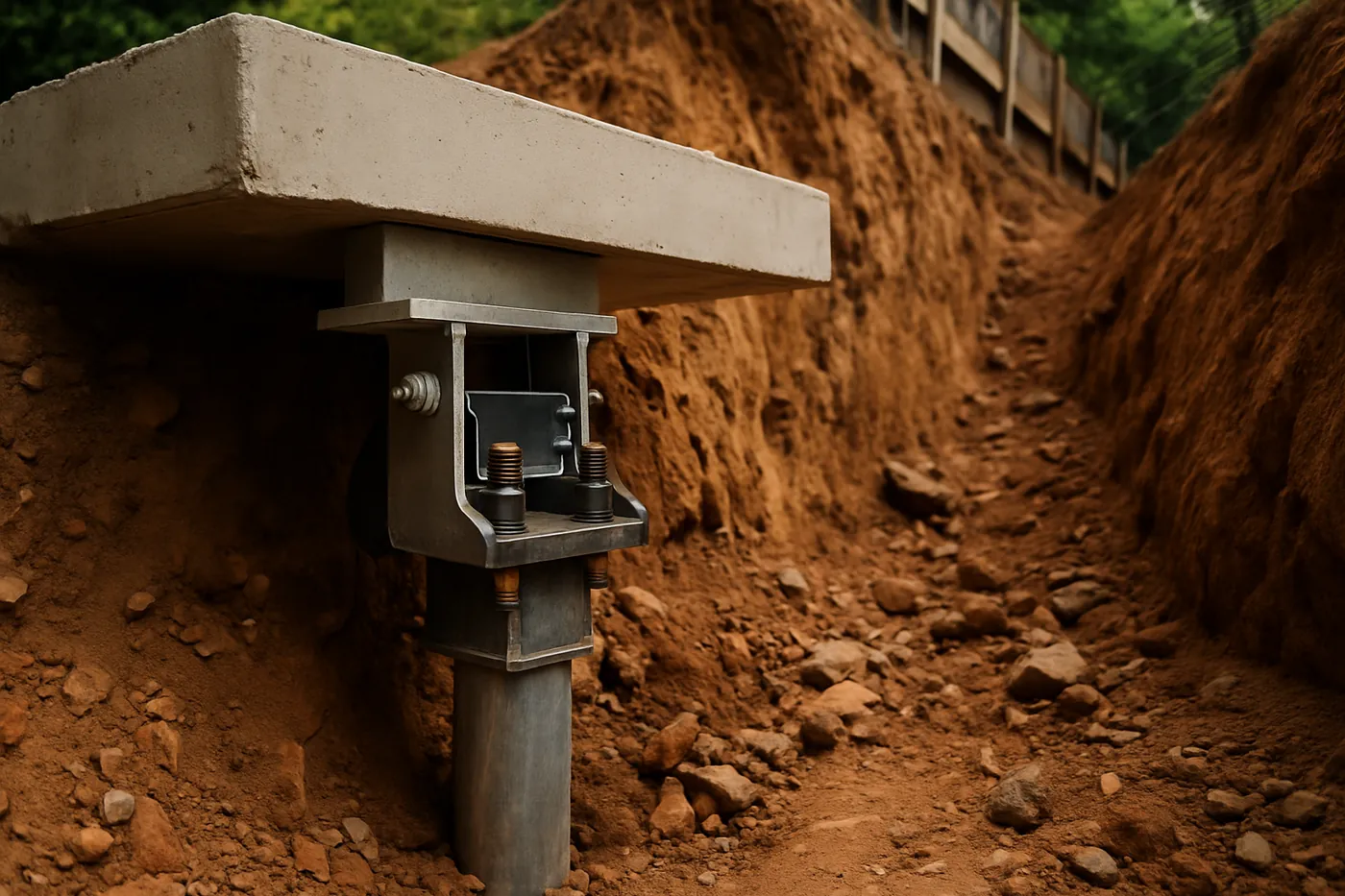
The standard diagnostic here is cut versus fill: which part of the house sits on undisturbed residual soil and which on placed material, because the two settle differently no matter how well the fill was compacted. Development records and the topography usually tell, and the floor survey confirms it: cut-and-fill houses tend to crack along the boundary rather than at a random corner.
Former farmland carries hidden drainage
Agricultural land carries drainage infrastructure designed to move water off fields: ditches, culverts, and in places buried tile. Development doesn't always remove it, and where a subdivision sits over that network, water can be routed toward a foundation as readily as away from one. Old drainage also fails without any sign at the surface.
That explains a real share of "the basement never used to do this" complaints out here, and it's why it pays to ask about a property's prior use rather than assuming a young house on flat-looking ground has a simple water story.
Valley position, ridge-fed water
A valley floor between ridges receives what the ridges shed. Even on a lot that looks level, subsurface and surface water can be arriving from considerable elevation above. Ooltewah evaluations walk that path, because the water crossing your lot frequently started somewhere with a much better view.
Asked in Ooltewah
Our subdivision was farmland a few years ago. Does that matter?
It can. Agricultural drainage (ditches, culverts, buried tile) was designed to move water off fields, not around houses, and development doesn't always remove it. A line running near a house can route water toward a foundation as easily as away, and old drainage fails with no sign at the surface.
My house is only a few years old. Why is it cracking?
Newer construction isn't exempt here. Backfill around a new foundation is looser than the native ground beside it, so it collects surface water and delivers it to the footing. Add a cut-and-fill pad settling unevenly and you get real movement in a young house that has nothing to do with build quality.
Our lot looks flat. Can slope water still be the problem?
Slope water can still be the problem on a flat-looking lot, and this is the most common surprise out here. A valley floor between ridges receives what the ridges shed, so water can arrive from considerable elevation above even when your own lot reads level. The evaluation walks that path rather than stopping at the property line.
What does an evaluation cost in Ooltewah?
It depends on the company. Many local specialists don't charge for the first visit; ask when the specialist calls, before they come out, and ask for photos, crack measurements, laser floor elevations, wall plumb readings where relevant, a walk of the water path and a written, itemized scope, including when the visit ends with a recommendation to monitor rather than repair.
What happens after you call
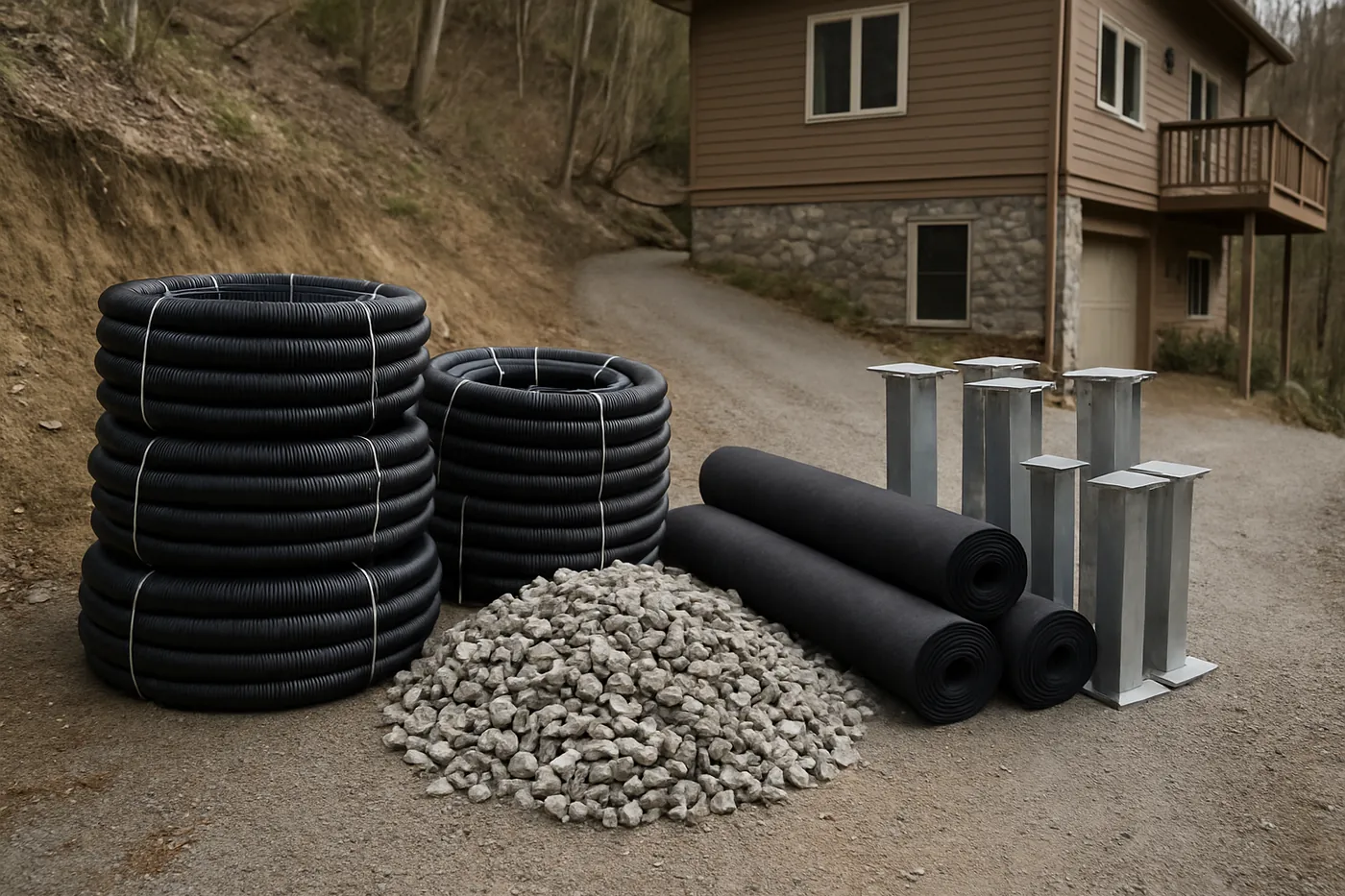
An Ooltewah house should be measured before it is priced: floor elevations, crack widths, wall plumb, and a walk uphill of the house for the water story. Ask for a written scope with itemized line prices, and an honest "watch it" when that's what the numbers say. See the cost guide or the full service list.
Get a Chattanooga foundation evaluation
Tell us what the house is doing (stair-step cracks, a wall pushed in on the uphill side, water crossing the lot, sloping floors) and we'll pass it to one independent local specialist for an evaluation. You get a call back from a local specialist who serves Chattanooga.